Good Energy — Climate Reality Check
A two-question test for Hollywood, then academia, to measure how climate shows up across film and television.
The Challenge
Climate change was in everyone's life and almost no one's script.
Not for lack of caring, but for lack of a measuring stick.
There was no shared way to ask whether climate was present in a story, so no way to know if anything was changing, and no way to make a case to executives. What the industry needed was a shared measuring tool.
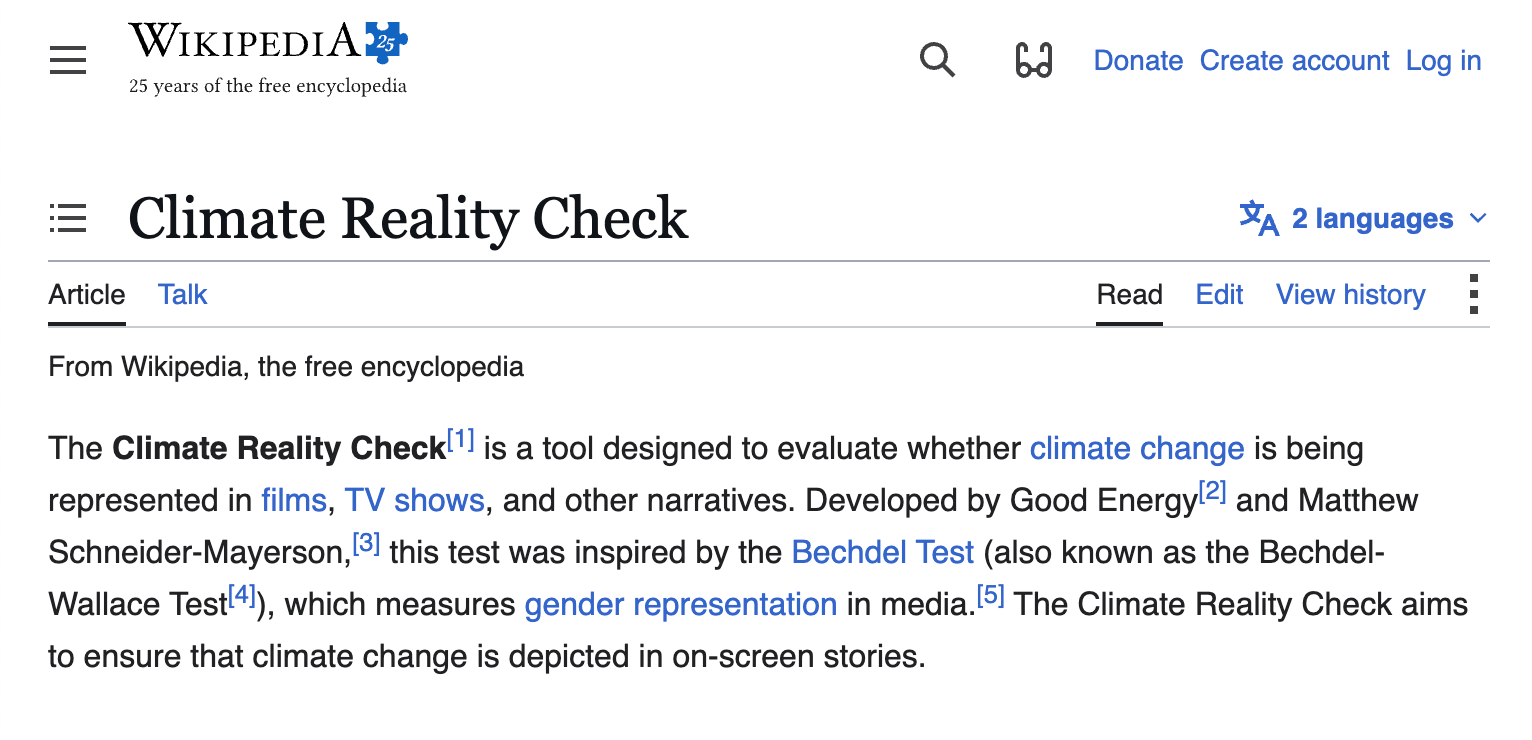
We set out to create one inspired by the Bechdel Test. Based on the research, it had to be 1) creatively generative, 2) academically measurable, and 3) simple enough for anyone to use.
The Process
Over 200 interviews
I led the qualitative research and prototyping behind the test: more than 200 interviews with writers, showrunners, executives, climate scientists, and media researchers.
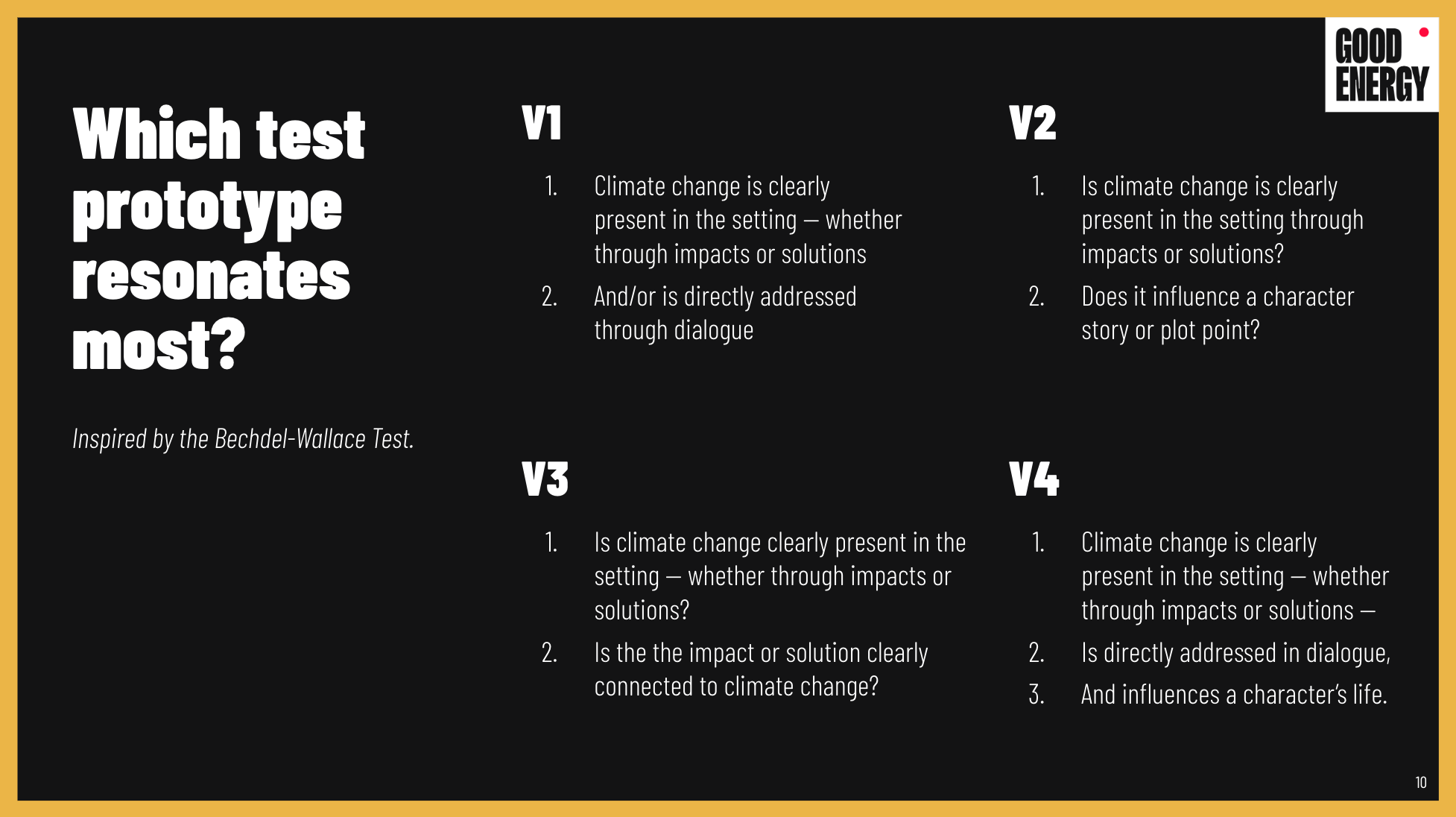
The prototypes of the tool had one part, two, three — at one point it had five parts. Each version got tested against the three research-informed criteria.
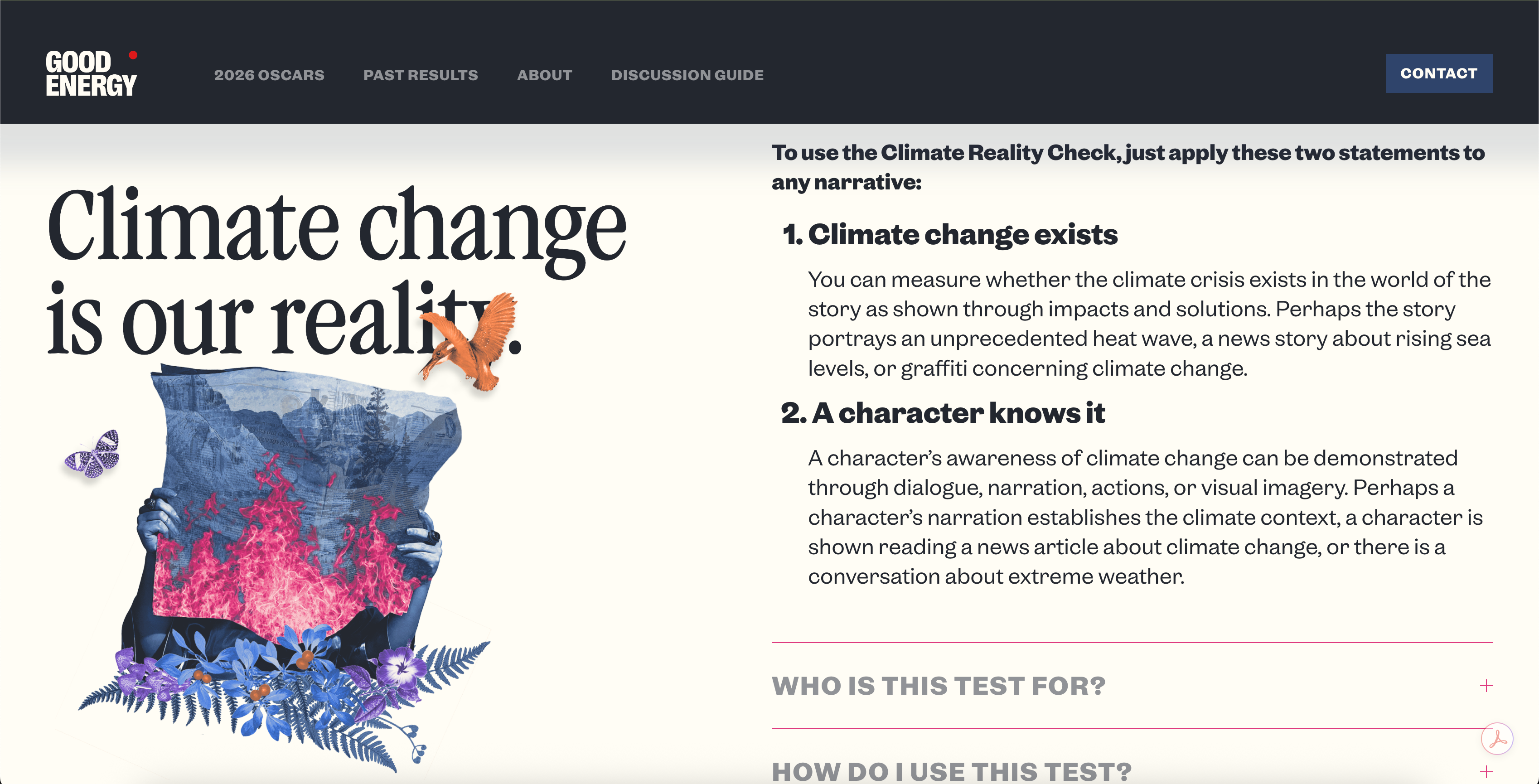
Two questions, which became the Climate Reality Check, rose to the top. Does climate change exist in the world of the story? And does a character know it?
The Outcome
The Climate Reality Check launched on NPR's "All Things Considered" in March 2024, alongside a study of the 250 most popular films of the previous decade.
Fewer than 10% of those films passed the test. But we learned that those that passed performed 10% better at the box office — a data point that proved to executives across Hollywood that climate in stories is not a commercial risk. Allowing more stories to make it on-screen.
The Impact
I now lead the annual study analyzing which Oscar-nominated films pass the Climate Reality Check. Of the eligible nominees, 23% passed in 2024, 10% in 2025, and 31% in 2026 — the highest since we started tracking, across five films that earned close to a billion dollars worldwide.
The tool has also been picked up globally, organically. The London School of Economics and LUT University have used it. Researchers in Korea applied it to K-dramas. A Brazilian study built on it was presented at COP in Belém. And the Hollywood Reporter used it in their sustainability issue.
How the test grew
Early prototypes, the final outcome, and how it's traveled